Cost Breakdown · 8 min read
Open-Cell vs. Closed-Cell Spray Foam Chemical Costs: What Contractors Should Budget For
Cost-per-board-foot math, yield differences, and how to bid jobs accurately as set pricing moves through the season.
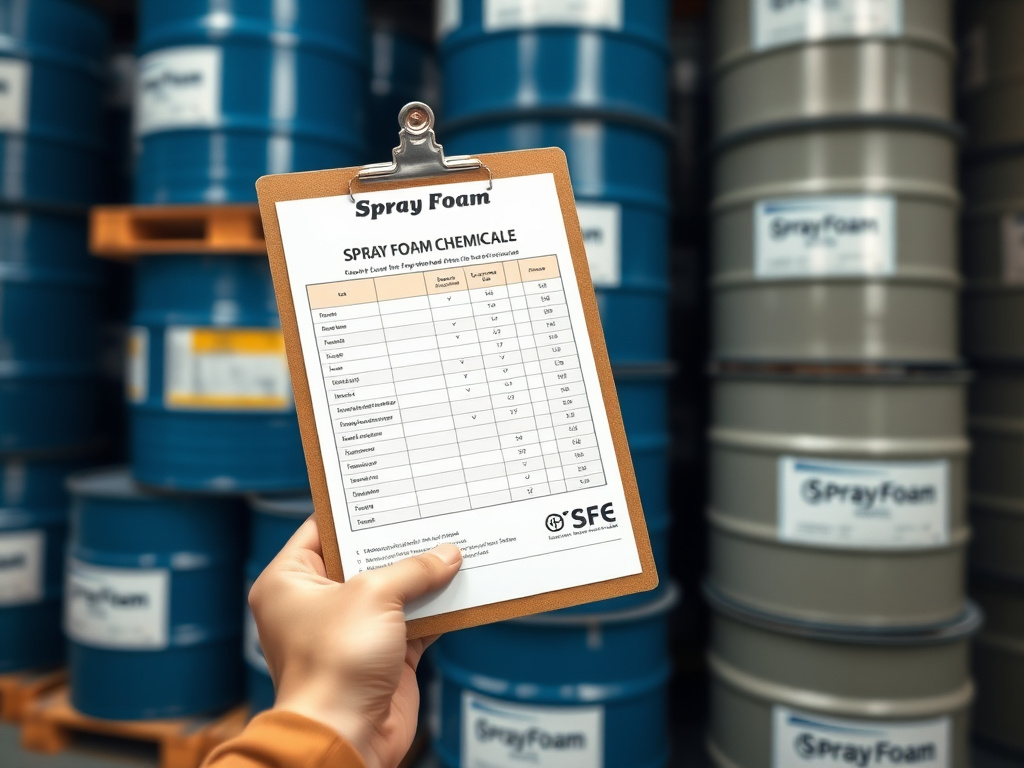
The set price on a pallet of chemicals tells you almost nothing about your actual cost per job until you run it through yield. A more expensive set that covers dramatically more square footage can easily beat a cheaper set on true cost-per-board-foot — and getting this math wrong is one of the fastest ways to underbid a job and eat the difference out of your margin.
Yield Is the Number That Actually Matters
| Product | Density | Typical Yield | Cost per Set (approx.) | Cost per Board Ft. |
|---|---|---|---|---|
| Closed-Cell (2.0 lb) | 2.0 lb/ft³ | 4,200–4,800 bd. ft. | $$$ | Higher per bd. ft. |
| Open-Cell (0.5 lb) | 0.5 lb/ft³ | 15,000–17,000 bd. ft. | $$ | Lower per bd. ft. |
Open-cell's dramatically higher expansion ratio means a single set stretches across far more square footage than a closed-cell set at a comparable or even lower total price — which is exactly why open-cell wins on cost-per-board-foot for large interior cavity jobs, even though closed-cell delivers a higher R-value per inch. Closed-cell earns its higher per-board-foot cost on jobs where you actually need the structural rigidity, vapor-retarder function, and higher R-value per inch — exterior walls, roofing, and rim joist applications where a thinner application at higher performance is the point.
Building Yield Into Your Bid
The most reliable way to bid accurately is to calculate cost-per-board-foot from your actual recent set consumption, not the manufacturer's theoretical yield spec. Real-world yield runs 5–15% below theoretical spec depending on ambient temperature, substrate condition, and operator technique — a crew consistently hitting closer to theoretical yield is running tight ratio control and minimal overspray waste, while a crew running well below spec is either fighting cold-weather conditions or losing material to technique issues worth addressing.
Track your actual bags-per-job or sets-per-job over a few months and build your bid template around that real number rather than the spec sheet. It's a more conservative number, which protects your margin, and it also gives you an early warning signal if yield starts trending down — often the first sign of a proportioner ratio drift or a chemical viscosity issue from improper drum storage worth investigating before it becomes a bigger problem.
Seasonal Price Swings and Pre-Buying
Chemical set pricing isn't static year-round — demand pressure ahead of spring and early summer building season typically pushes pricing up compared to the winter off-season. Active contractor accounts that pre-buy inventory during the slower months through a seasonal pre-buy program lock in lower per-set costs before the spring rush drives pricing up, effectively bidding the season's jobs against off-season chemical cost rather than peak pricing.
A Simple Bid-Cost Formula
For a quick sanity check on any bid: divide your actual per-set cost by your tracked real- world yield to get a true cost-per-board-foot figure, then multiply by the job's total board footage to get raw material cost before labor, overhead, and margin. Run this same math for both open-cell and closed-cell options where either could technically satisfy the assembly's code requirement, and you'll often find a meaningful cost difference that's worth discussing with the customer rather than defaulting to whichever chemistry you happen to have loaded on the rig that week.
Lock In Season Pricing
Pre-buy chemical inventory ahead of the spring rush and bid your season against off-season pricing.