Coast to Coast
Shipping & Logistics
Chemical viscosity and equipment reliability don't survive being frozen or baked in an uninsulated trailer for a week. We manage freight logistics with that in mind — temperature-controlled where it matters, fast where speed matters, every load documented.
Freight Class Matters More Than Contractors Expect
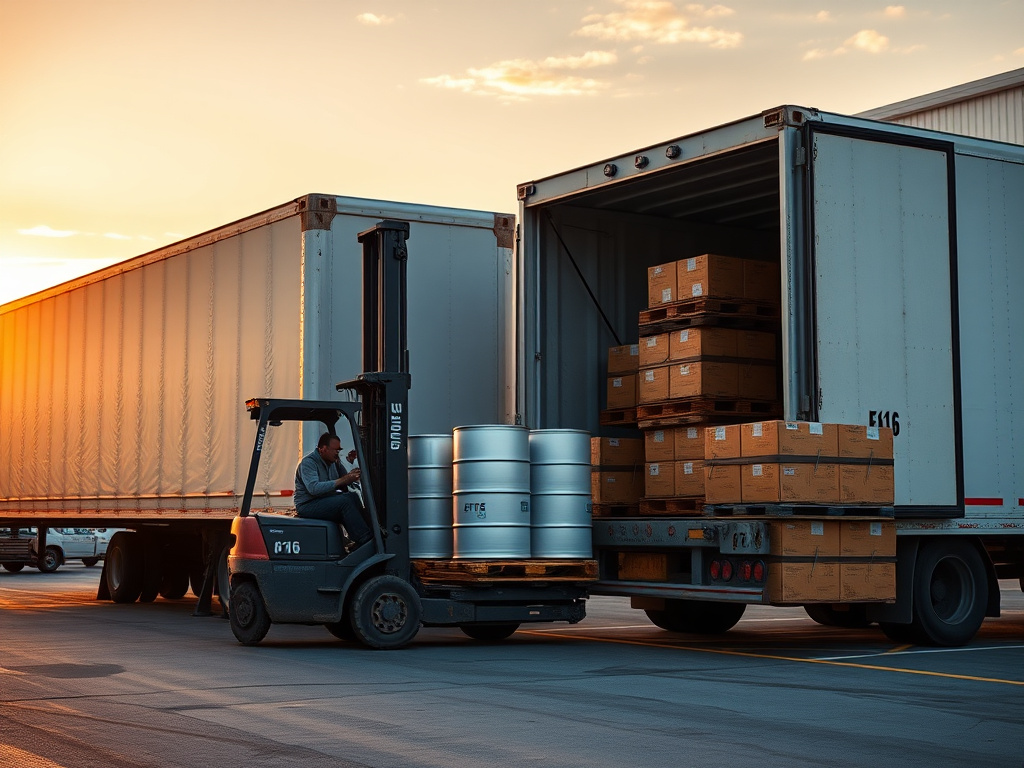
Pallet freight for full chemical sets moves via standard LTL (less-than-truckload) carriers, and during winter months and summer heat waves that freight is temperature-managed to keep drums inside their spec range in transit — the same freeze/thaw damage that ruins improperly stored drums at your shop can happen just as easily in an uninsulated trailer for three days on the highway. We route seasonal chemical freight through carriers with temperature- controlled trailer capacity rather than defaulting to whatever's cheapest that week.
Rig deliveries are a different logistics problem entirely — a trailer-mounted or truck- mounted proportioner unit typically ships via dedicated flatbed or enclosed transport, with delivery scheduling coordinated directly with the receiving contractor rather than a standard freight dock drop. Parts and small accessory orders move via standard parcel carriers and ship same or next business day for in-stock items.
Reading a Freight Tracking Update Correctly
LTL freight tracking updates less frequently than parcel tracking — a chemical pallet might show a single status update at pickup and not another until it's out for delivery, which can read as "stuck" when it's actually moving normally through the carrier's terminal network. If a tracking number hasn't updated in a couple of days, that's usually normal LTL behavior rather than a sign of a lost shipment, especially across a multi-terminal cross-country route.
If you genuinely need to confirm status ahead of a job date, reach out directly rather than relying solely on the tracking portal — we can check with the carrier's dispatch directly and give you a more current answer than the public tracking page, especially in the final 48 hours before an expected delivery window.
Shipping by Order Type
Chemical Pallet Freight
Temperature-managed LTL freight for full and multi-pallet chemical orders, scheduled around your jobsite timeline.
Rig & Equipment Delivery
Dedicated flatbed or enclosed transport for rigs, with delivery windows coordinated directly with your shop.
Parts & Accessories
Standard parcel shipping, same or next business day dispatch on in-stock items.
Order Tracking
Every freight and parcel order includes tracking information sent directly to your contact email.
Planning Delivery Around Your Job Schedule
Freight delivery windows aren't always precise to the hour, which is exactly why we recommend ordering chemical sets at least a few business days ahead of a scheduled job rather than same-week — that buffer absorbs normal freight variability without putting a job date at risk. Active contractor accounts with a predictable order cadence can set up standing delivery schedules that align with a regular weekly or biweekly job pipeline; ask through the contractor pricing program for details.
For contractors in more remote areas where standard LTL freight service is limited, reach out before ordering — we can typically arrange delivery, though transit times and minimum order thresholds may differ from standard metro-area service.
What to Do If a Delivery Doesn't Arrive as Scheduled
Freight delays happen even with a carrier we trust — weather, terminal backlogs, and mechanical issues on the carrier's end are outside anyone's direct control. If a delivery is running behind a scheduled job date, contact us as soon as it's clear there's a problem rather than waiting until the morning of the job. We can usually check status directly with the carrier's dispatch and, where a real gap exists, look at options like a partial will-call pickup from the nearest terminal to keep a job from being pushed entirely.
For jobs where a delay simply isn't an option, order enough buffer ahead of the job date that a normal freight variance doesn't put the job date at risk in the first place — treating the freight timeline as a hard commitment rather than building in slack is the most common cause of a scheduling scramble that was actually preventable.
Shipping & Logistics FAQs
How long does chemical freight typically take to arrive?+
Standard LTL freight for chemical pallets typically arrives within 3–7 business days depending on distance from our distribution point, with temperature-managed transit during extreme weather months.
Do you ship to rural or remote areas?+
In most cases, yes — reach out before ordering if you're outside our standard metro LTL delivery zone so we can confirm delivery options and any adjusted transit time.
Is there a minimum order for free freight?+
Free-freight thresholds apply at multi-pallet order volumes — contact us or check the contractor pricing page for current thresholds.
How are rigs delivered — do I need a loading dock?+
No loading dock required. Rig deliveries are coordinated directly with you for ground-level drop-off, typically via flatbed or enclosed trailer transport.
Can I pick up an order directly instead of having it shipped?+
Will-call pickup may be available depending on order type and location — ask through the contact page when placing your order.
Plan Your Next Delivery
Order chemicals a few days ahead of your job date to keep freight variability from touching your schedule.