Applicator Equipment
Guns & Heated Hoses
The gun is where chemistry becomes finished foam — mix quality, ratio control, and trigger response at the tip separate a clean, even pass from a callback. We stock applicator guns and heated hose systems compatible with the proportioner brands most contractors already run.
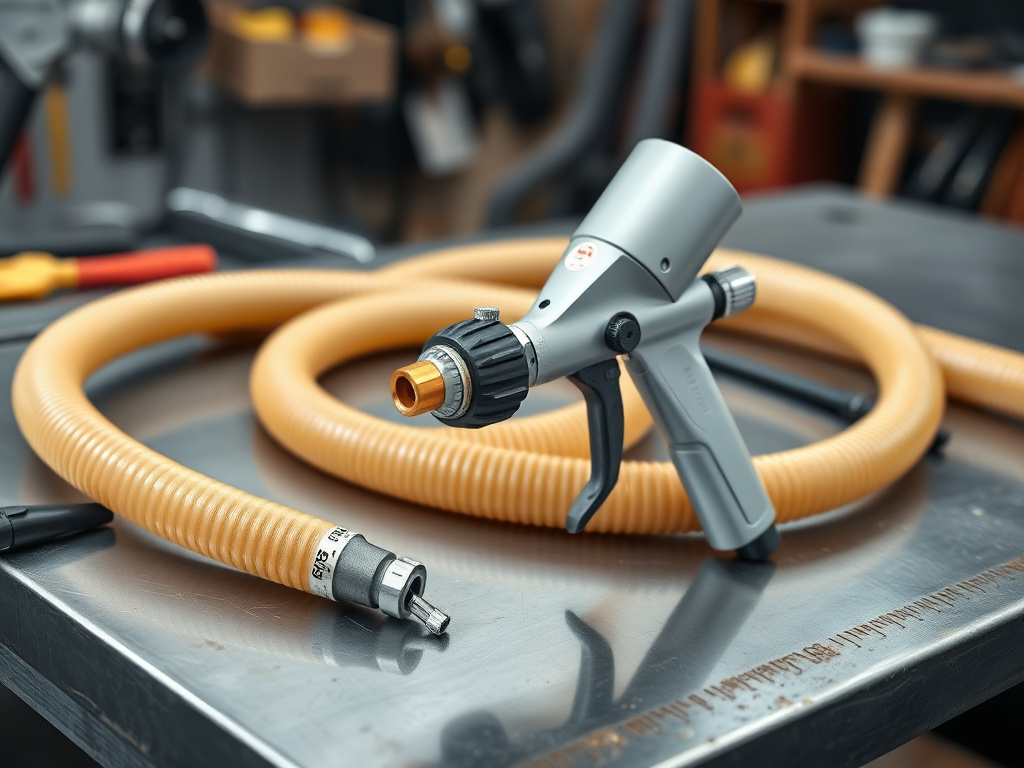
Gun Selection: What Actually Matters
Every applicator gun on the market claims tight ratio control, but the real difference shows up in how the gun handles a full 8-hour spray day: trigger fatigue, mix-chamber cleaning frequency, and how quickly a technician can swap a worn tip mid-job without shutting the rig down. Air-purge guns clear the mix chamber between passes using compressed air, cutting cleaning downtime dramatically compared to older mechanical-purge designs — worth the marginal cost difference for any crew spraying more than a couple jobs a week.
Heated hose is just as critical as the gun itself. Chemical viscosity is temperature- dependent, and hose that can't hold a stable 110–130°F from the proportioner all the way to the tip introduces exactly the kind of off-ratio inconsistency that shows up as tacky, uneven, or shrinking foam. We stock hose in standard lengths from 50 to 300 feet with consistent heater-band spacing, so a hose extension doesn't introduce a cold spot partway down the run.
Matching Hose Length to Your Rig Layout
Longer hose isn't automatically better — every additional foot adds pressure drop and heat loss that the proportioner has to compensate for, and a hose run longer than the jobsite actually requires just means more weight to drag through a house and more time coiling and uncoiling between stops. Most residential crews are well served by a 100–150 foot primary run, stepping up to 200–300 feet only for larger properties or commercial sites where the rig genuinely can't park closer to the work area. Buying the shortest hose length that reliably covers your typical jobsite footprint reduces both wear and daily setup time.
Hose diameter matters as much as length for larger commercial jobs. A standard 3/8-inch hose handles most residential-scale output rates without issue, but crews running high-output commercial rigs at sustained 20+ lbs/minute often step up to a larger diameter to avoid excessive pressure drop over longer runs. If you're speccing a new rig alongside a hose purchase, match hose diameter to your proportioner's rated output rather than defaulting to whatever diameter your last rig used.
Gun Type Comparison
Compatible with Graco and PMC/Gusmer proportioner systems.
| Product | Purge Type | Best For | Cleaning Time |
|---|---|---|---|
| Air-Purge Gun | Compressed air | High-volume daily use | Fast (seconds) |
| Mechanical-Purge Gun | Manual | Lower-volume / occasional use | Slower (minutes) |
| Round-Spray Gun | Air-purge | Fine detail, tight cavities | Fast (seconds) |
Daily Care That Extends Gun Life
A gun that gets a proper end-of-day purge and a quick visual check consistently outlasts one that gets set down and picked back up the next morning without attention. Chemical left to cure inside a mix chamber overnight is one of the most common — and most preventable — causes of a gun needing an unscheduled rebuild. Building a two-minute end-of-shift cleaning habit into your crew's routine costs almost nothing and meaningfully extends the interval between rebuild kits.
Trigger response is worth a quick check too. A gun that's started to feel sluggish or inconsistent on the trigger before it's obviously malfunctioning is often giving an early warning that internal seals are starting to wear — catching that before a full failure means a scheduled rebuild instead of a mid-job breakdown.
Keeping Guns & Hoses in Service
In-Stock Rebuild Kits
O-rings, mix chambers, and gun tips ship same or next day so a worn part doesn't shut down a job.
Heater Band Replacement
Individual heater band sections for hose repair — no need to replace a full run over one failed segment.
Compatibility Guaranteed
Every gun and hose listing specifies exact proportioner compatibility so you're not guessing at fitment.
Technical Support
Call our support line for troubleshooting a ratio or temperature issue before you assume you need a new part.
Gun & Hose FAQs
How often should a mix chamber be replaced?+
Mix chambers wear with use — most active daily-use guns need a mix chamber replacement every 4–8 weeks depending on chemical volume sprayed. Keep spares on hand rather than waiting for a mid-job failure.
Can I use a Graco gun with a PMC proportioner?+
No — gun and hose systems are matched to specific proportioner brands and pressure/ratio specs. Mixing brands typically requires an adapter kit and isn't recommended without confirming exact compatibility first.
What causes a gun to spray off-ratio even when the proportioner reads correct?+
A worn or clogged mix chamber, a partially blocked chemical filter, or a failing check valve at the gun tip are the most common causes — the proportioner can read a correct ratio at the pump while the gun itself is delivering off-ratio material.
How long should heated hose last with regular use?+
Well-maintained heated hose typically lasts 2–4 years of regular daily use before heater band failure becomes frequent enough to warrant replacement, though damage from kinking or overheating can shorten that significantly.
Do you sell replacement heater bands individually?+
Yes — heater band sections are sold individually so a single failed segment doesn't require replacing an entire hose run.
What length hose do I need for residential attic jobs?+
Most residential attic and interior work is comfortably covered by 100–150 feet of hose. Larger properties or commercial jobs with more distance from the rig to the work area often run 200–300 feet.
Keep Your Gun Running
In-stock rebuild kits and heated hose ship fast — don't let a worn part cost you a job day.