Shop Setup · 7 min read
Proper Drum Storage & Handling for Spray Foam Chemicals: A Contractor’s Checklist
Ideal storage temperatures, freeze/thaw effects on viscosity, safe handling equipment, and pre-job warm-up timelines that stop off-ratio spraying before it starts.
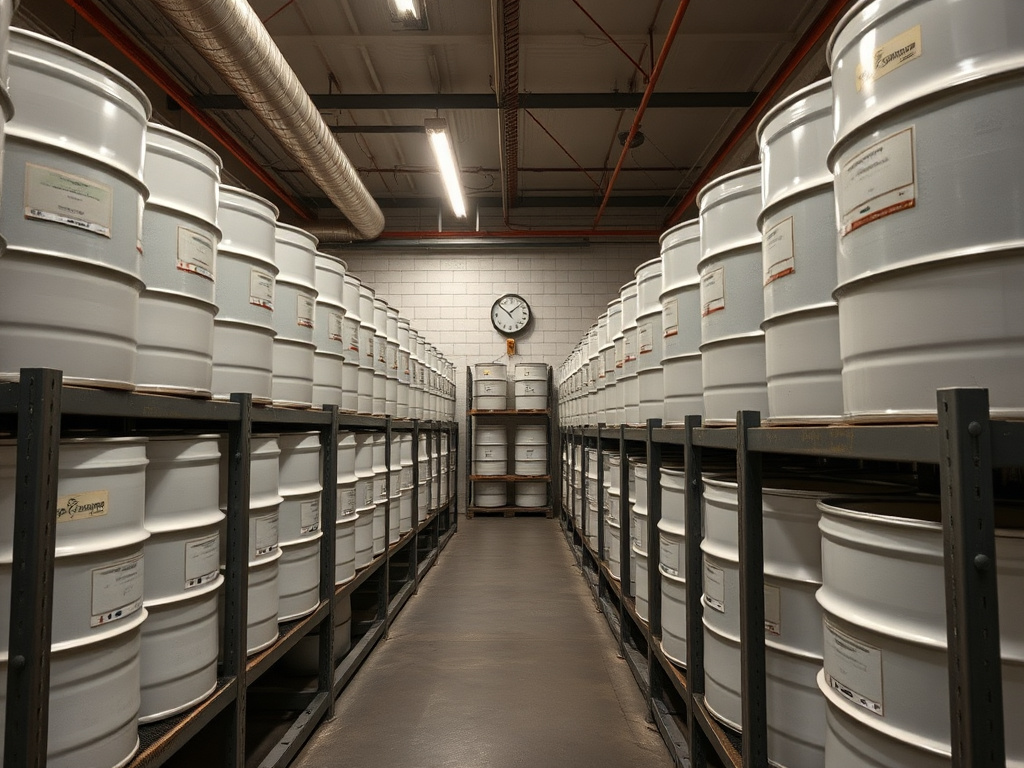
More chemical sets get ruined by improper storage than by anything that happens on the jobsite. Freeze damage, heat degradation, and lost lot-pairing are all preventable with a handful of storage habits — and all three show up later as a mystery off-ratio spray problem that gets blamed on the gun or proportioner instead of the drum that sat in a cold trailer for a week.
The Storage Temperature Window
Manufacturers generally spec a storage range of roughly 60–90°F for both A-side and B-side components. Going below that range — and especially letting drums actually freeze — changes viscosity permanently, even after the drum warms back up to room temperature. This isn't a minor performance dip. Freeze-damaged chemical shows up as inconsistent expansion, adhesion problems, and cure failures that look exactly like a proportioner ratio issue, which sends a lot of contractors chasing the wrong fix.
Setting Up a Simple Storage Area
You don't need industrial HVAC to store chemicals correctly. A dedicated, insulated space — even a converted shipping container or an insulated shop corner with a space heater and a simple thermometer — is enough for most small-to-mid-size operations. What matters is consistency: a space that swings from 45°F overnight to 95°F midday isn't protecting your inventory even if the average temperature looks fine on paper. Larger operations storing multiple pallets year-round often invest in a small dedicated climate-controlled room, but that's a scale decision, not a baseline requirement.
Safe Handling Equipment
A full 55-gallon drum weighs roughly 500 lbs, and manual handling — rolling or lifting a full drum without mechanical assistance — is one of the most preventable injury risks in a spray foam shop. A rated drum dolly or hand truck turns a two-person strain into a controlled, single-operator move. Shops handling higher drum volume should look at a forklift or pallet jack drum-lift attachment, which removes manual handling from the process almost entirely. See our drum handling & storage equipment page for specific dollies, racking, and containment options.
Rotating Stock and Keeping Lots Paired
Always store A-side and B-side drums from the same lot number together, clearly labeled, and rotate stock first-in-first-out. Losing track of lot pairing — grabbing an A-side from one lot and a B-side from another because they happened to be sitting next to each other — is a surprisingly common and entirely avoidable cause of ratio inconsistency that has nothing to do with your proportioner's calibration.
Warm-Up Time Before a Job
If drums have been in cooler conditions during transit — even within the acceptable range but on the lower end — give them at least 24–48 hours at room temperature before spraying. Loading a cold drum straight onto the rig and expecting immediate on-spec output is a common source of first-pass-of-the-day ratio problems that resolve themselves once the chemical reaches working temperature, but cost you material and time in the meantime. Building that warm-up window into your job-prep routine is a five-minute habit that prevents a real cost.
Set Up Your Storage Area Right
Talk to us about drum handling and storage equipment sized to your shop.